Build the process
Create the block flow diagram for ingredient preparation, dissolving and mixing, microfiltration, HTST sterilization, aseptic filling, packaging, and finished product.
Every technical decision has an economic consequence. TEA Navigator helps you understand both—before the investment is made.
TEA Navigator supports early-stage product and manufacturing decisions, where many alternatives are being considered and detailed business cases do not yet exist.
It links technical choices—such as formulation, process design, equipment selection, yields, energy consumption, cycle time, and aseptic processing—directly to economic outcomes including COGS and profitability. This is especially valuable during R&D and process development, when finance may not yet have built a detailed financial model.
A cosmetics manufacturer is evaluating a new line for a preservative-free facial toner containing a temperature-sensitive botanical extract. The process uses microfiltration, HTST sterilization, and aseptic filling.
The challenge is to achieve the required microbial reduction while preserving active-ingredient quality and maintaining an attractive operating margin.
Annual production: 1,000 t/year
Package size: 200 mL
Approximate output: 5 million bottles/year
Target operating margin: above 30%
Microbial target: 12-log reduction
Quality objective: maximize active retention
Create the block flow diagram for ingredient preparation, dissolving and mixing, microfiltration, HTST sterilization, aseptic filling, packaging, and finished product.
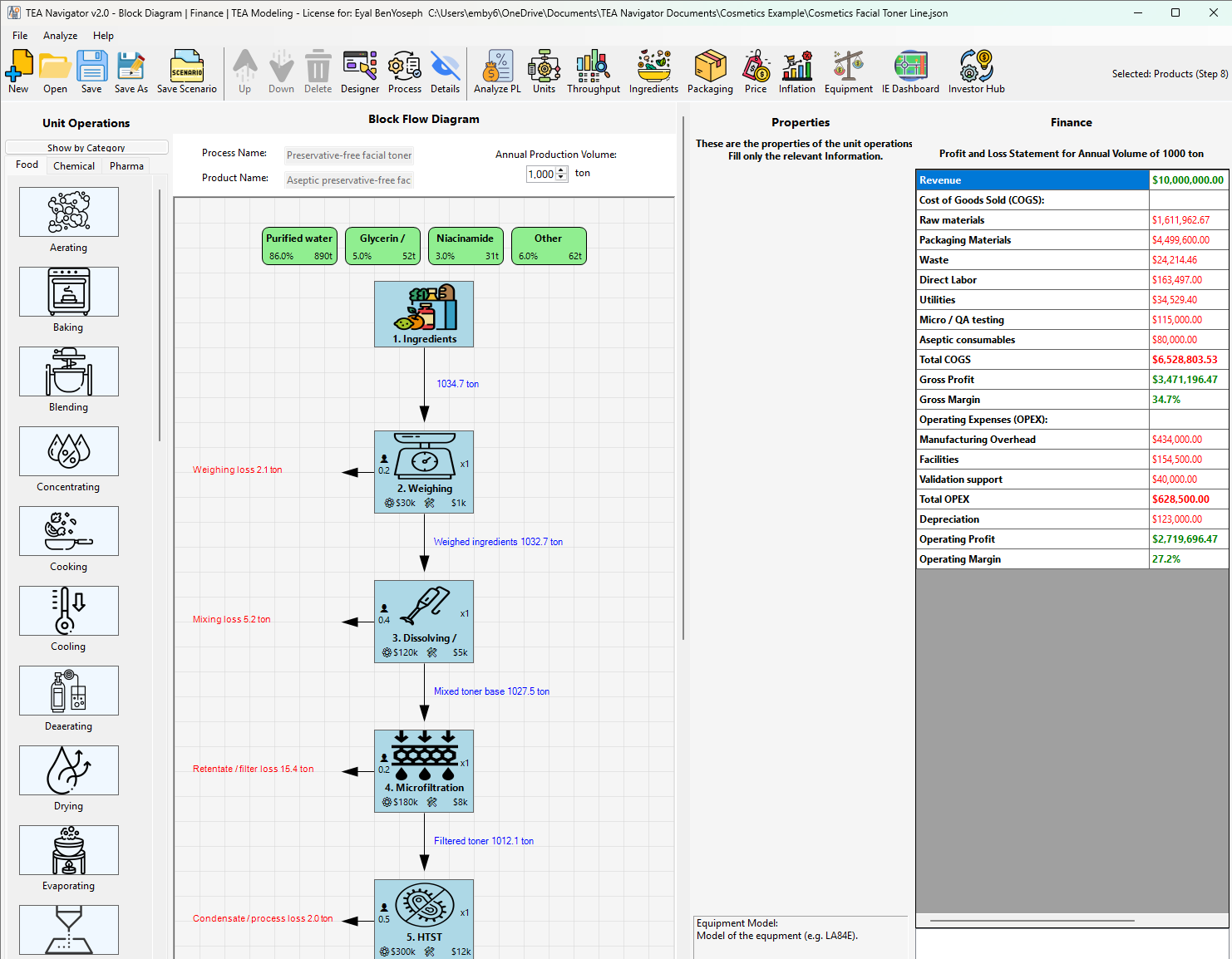
TEA Navigator calculates revenue, COGS, operating expenses, depreciation, operating profit, and operating margin for the planned production volume.
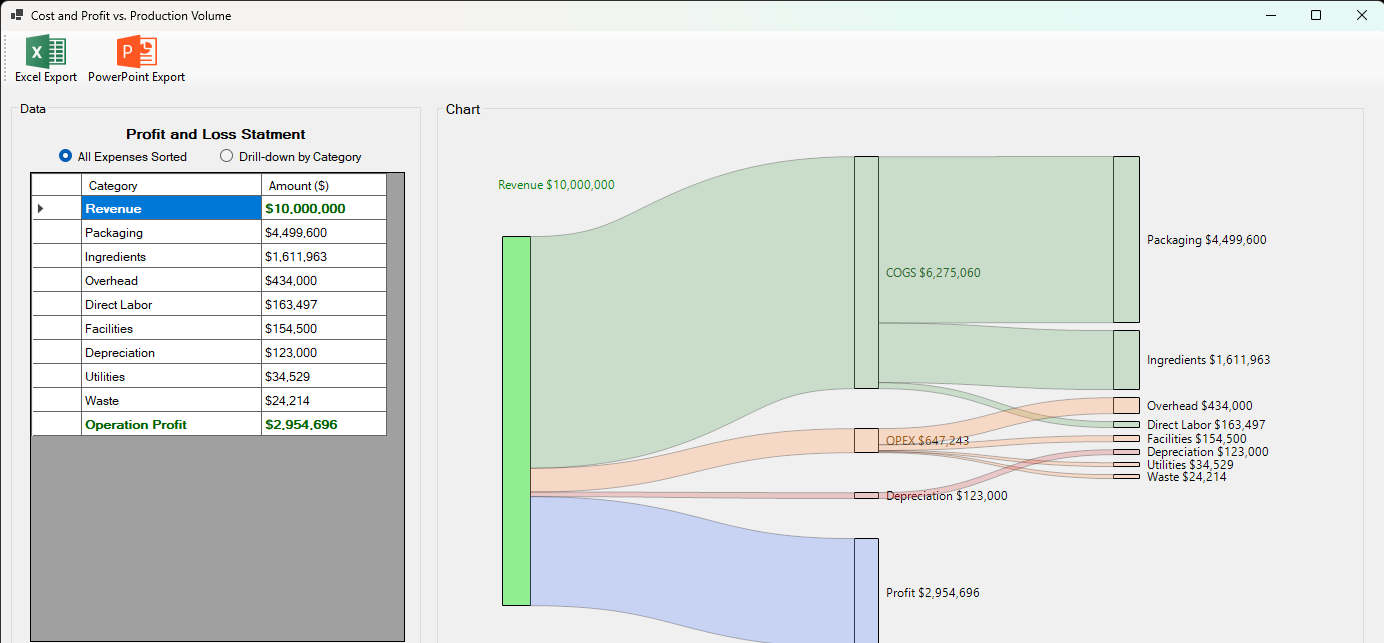
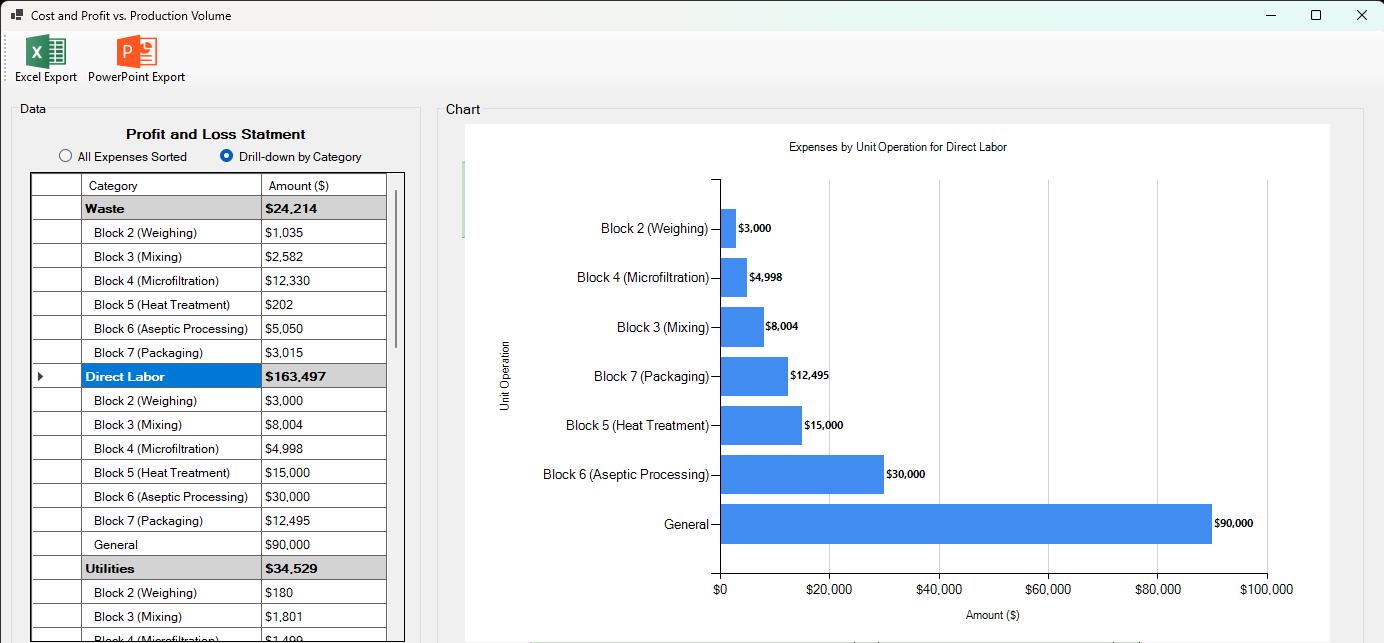
Review cost categories by unit operation to identify where labor, utilities, waste, facilities, and other expenses are generated.
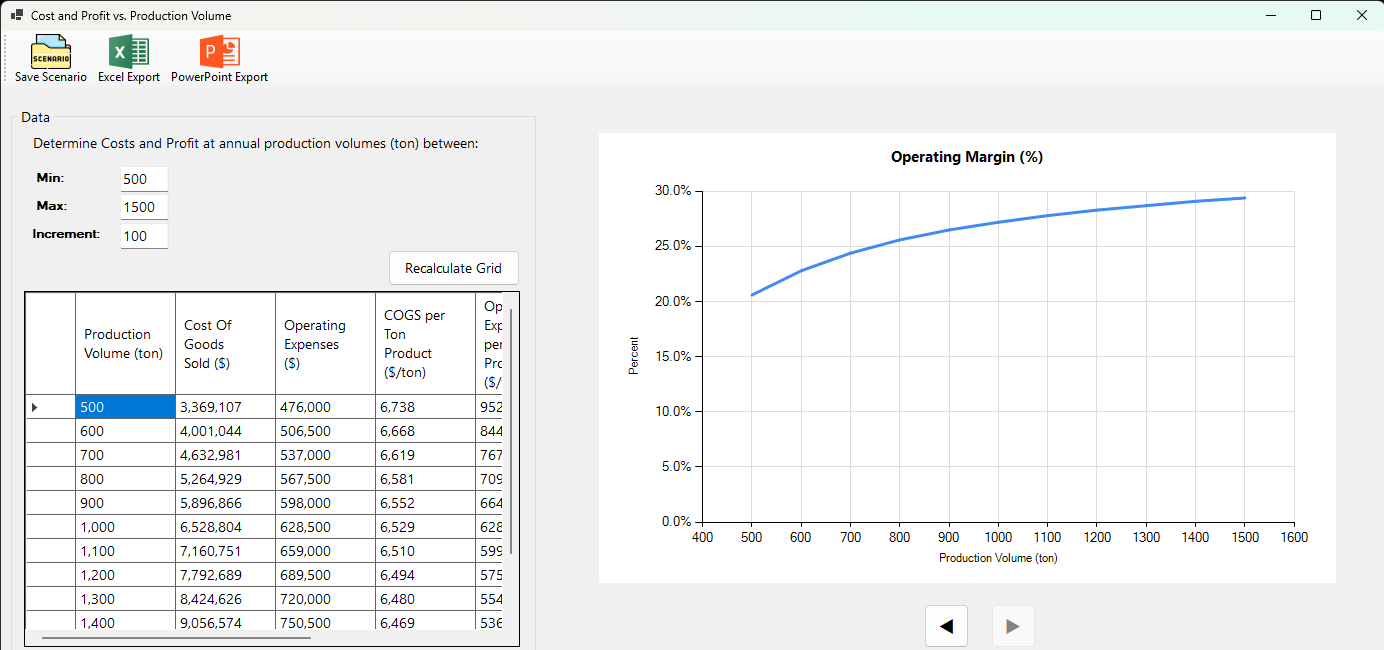
Determine how operating margin changes with annual production volume and identify the scale required to justify the investment.
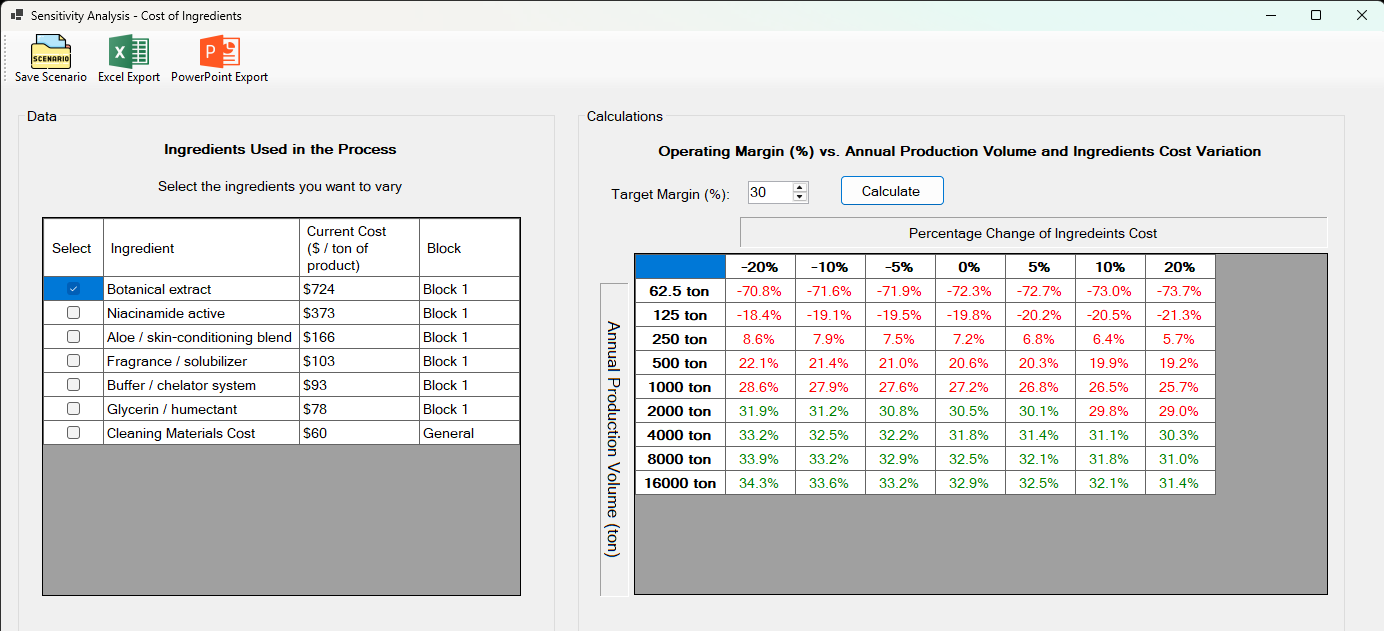
Evaluate how changes in botanical-extract cost influence operating margin across different production volumes and identify robust operating scenarios.
The same project connects economic analysis to a physics-based HTST heat-transfer, sterilization, and quality-retention model.
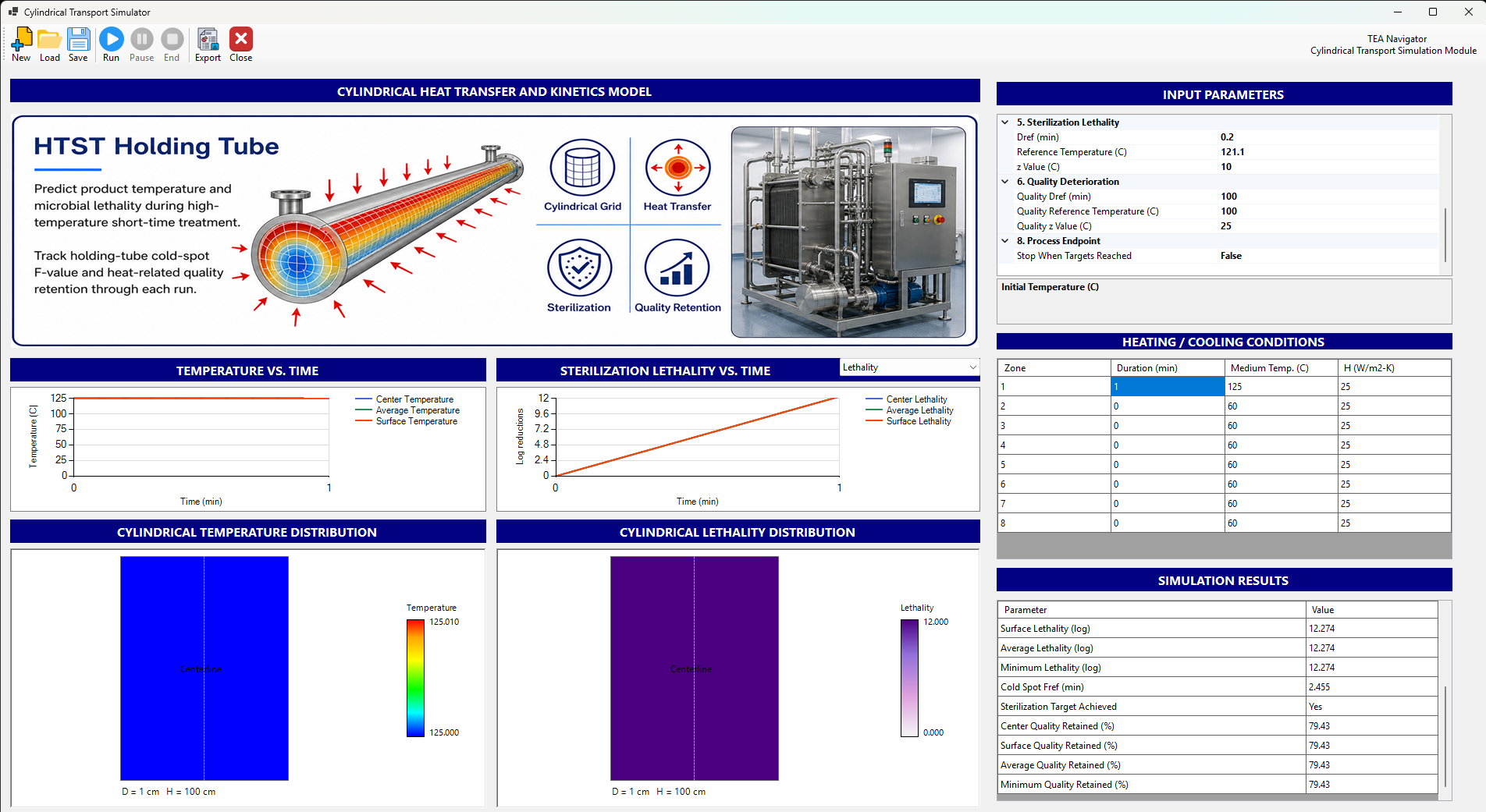
Predict product temperature, microbial lethality, cold-spot performance, and heat-related quality retention during high-temperature short-time processing.
Evaluate how temperature, holding time, heat-transfer conditions, and flow assumptions affect the required 12-log microbial reduction and the retention of temperature-sensitive botanical actives.
Every TEA Navigator license includes a Guided Cosmetic Industry Example designed to help you learn the software while exploring a realistic preservative-free facial toner manufacturing process.
Your learning package includes:
Additional guided Industry Examples are available for Food, Pharmaceutical, Biotechnology, and Chemical Manufacturing. Simply indicate your industry of interest when requesting your license.
Build the process, test assumptions, compare alternatives, and connect technical performance to financial outcomes.
Request your 10-day evaluation license and specify that you would like to receive the Guided Cosmetic Industry Example.
Get Access