Build the startup process
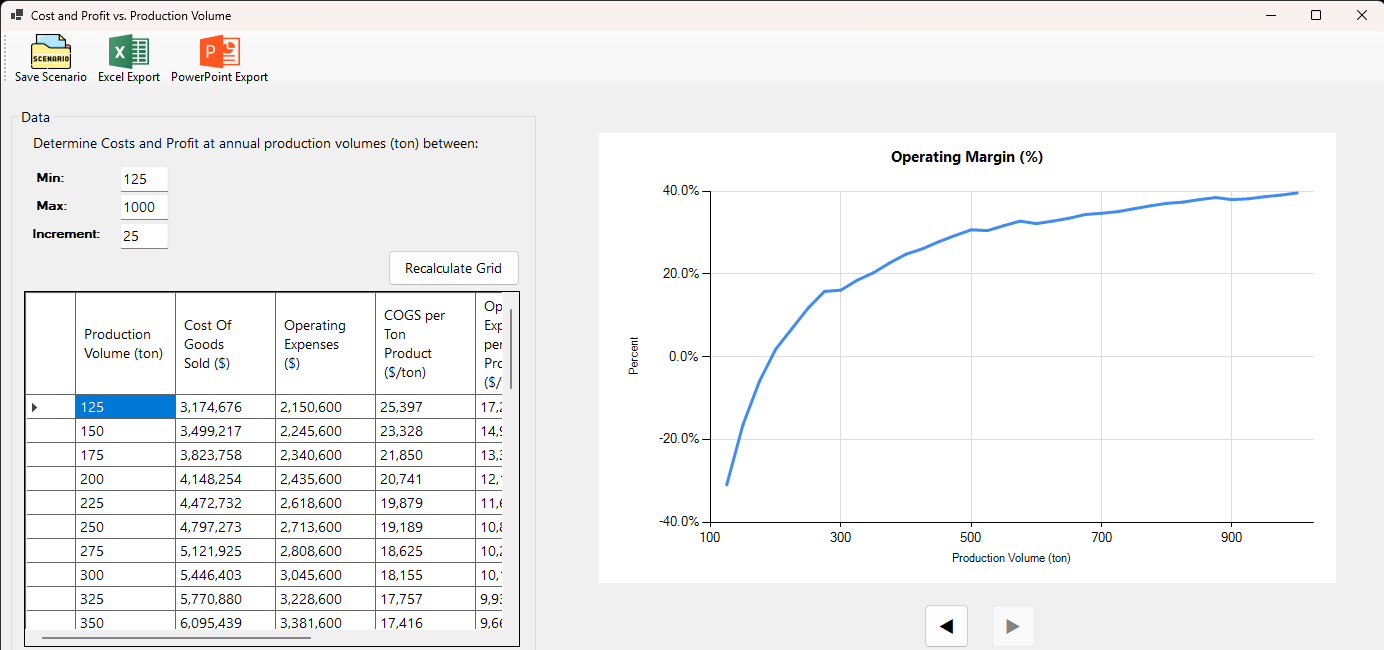
Create the block flow diagram for media preparation, HTST sterilization, production fermentation, purification, final drying, packaging, and finished product.
Every technical decision has an economic consequence. TEA Navigator helps you understand both—before the investment is made.
TEA Navigator supports early-stage commercialization decisions, where startup teams are evaluating scale-up options, process yields, equipment configurations, and financing requirements before a detailed business case exists.
It links technical choices—such as fermentation scale, media preparation, sterilization, recovery yield, purification, drying, labor, and cold-chain logistics—directly to economic outcomes including COGS, capital investment, cash flow, profitability, NPV, IRR, and payback. This is especially valuable when R&D teams, engineers, founders, and investors need a shared quantitative view of commercialization risk.
A fictional biotech startup is preparing to commercialize a long-acting GLP-1 analog peptide produced by batch fermentation.
Pilot production is expensive and operating margin is low. The startup must determine which bioreactor size, production volume, and recovery performance can make the business commercially viable and support an investor-ready scale-up plan.
Startup stage: pilot-to-commercial scale-up
Product: long-acting GLP-1 analog peptide
Baseline fermenter: 500 L pilot scale
Commercial options: 2,000 L, 5,000 L, and 10,000 L
Target operating margin: above 30%
Key technical model: HTST media sterilization and quality retention
Create the block flow diagram for media preparation, HTST sterilization, production fermentation, purification, final drying, packaging, and finished product.
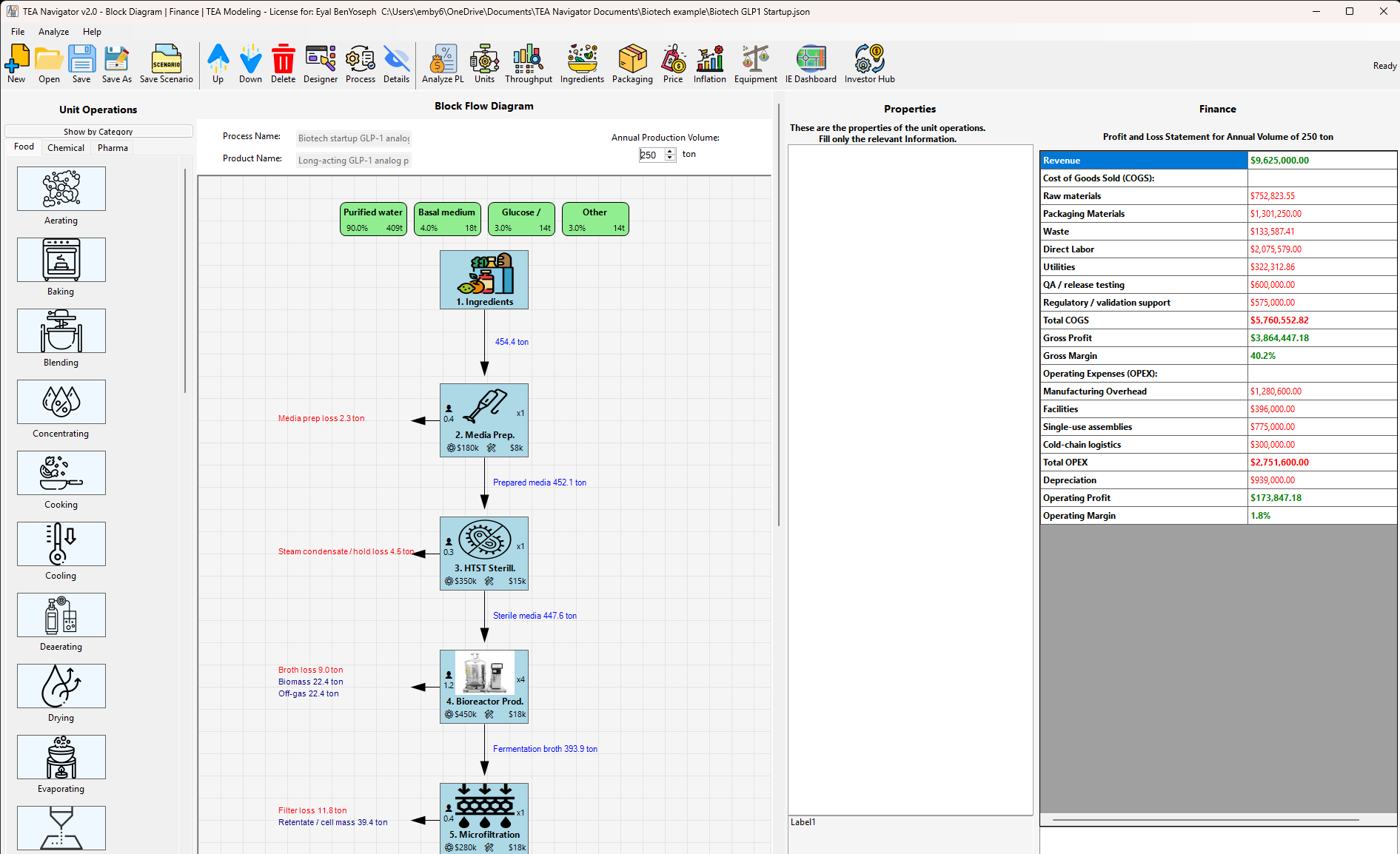
TEA Navigator calculates revenue, COGS, operating expenses, depreciation, operating profit, and operating margin to show whether the pilot-scale business is commercially viable.
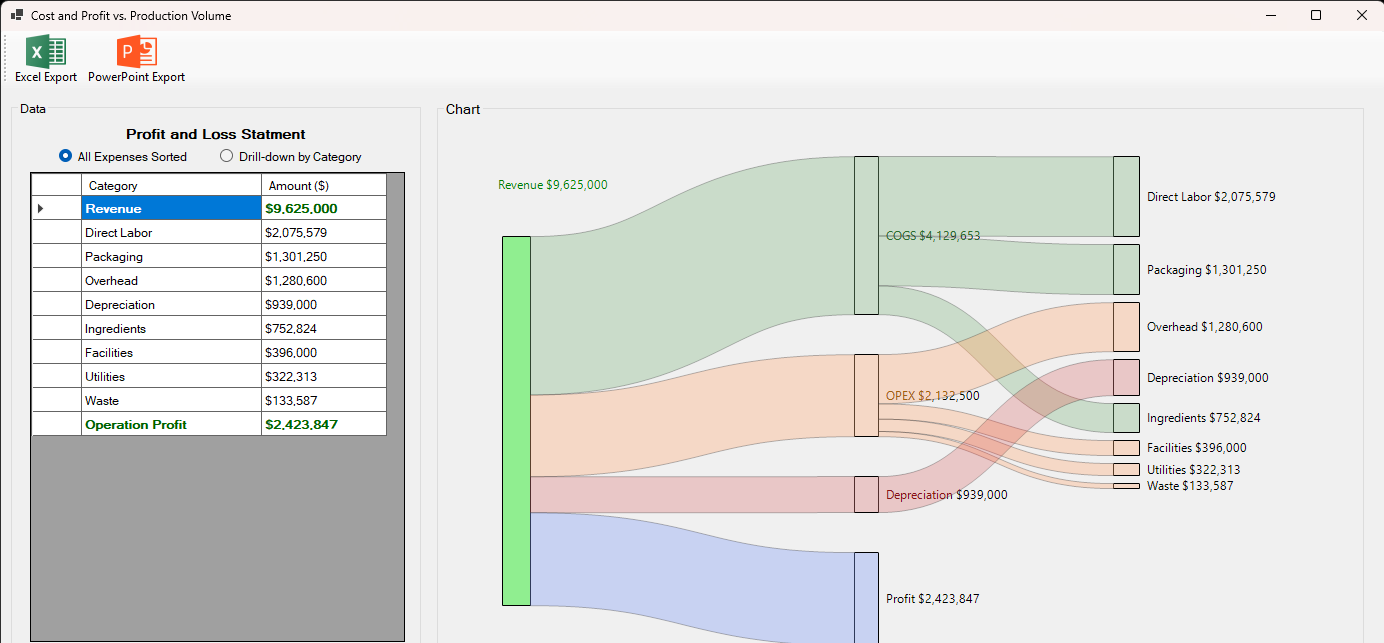
Drill down by unit operation to compare media, fermentation, purification, drying, labor, utilities, validation, facilities, and cold-chain expenses.
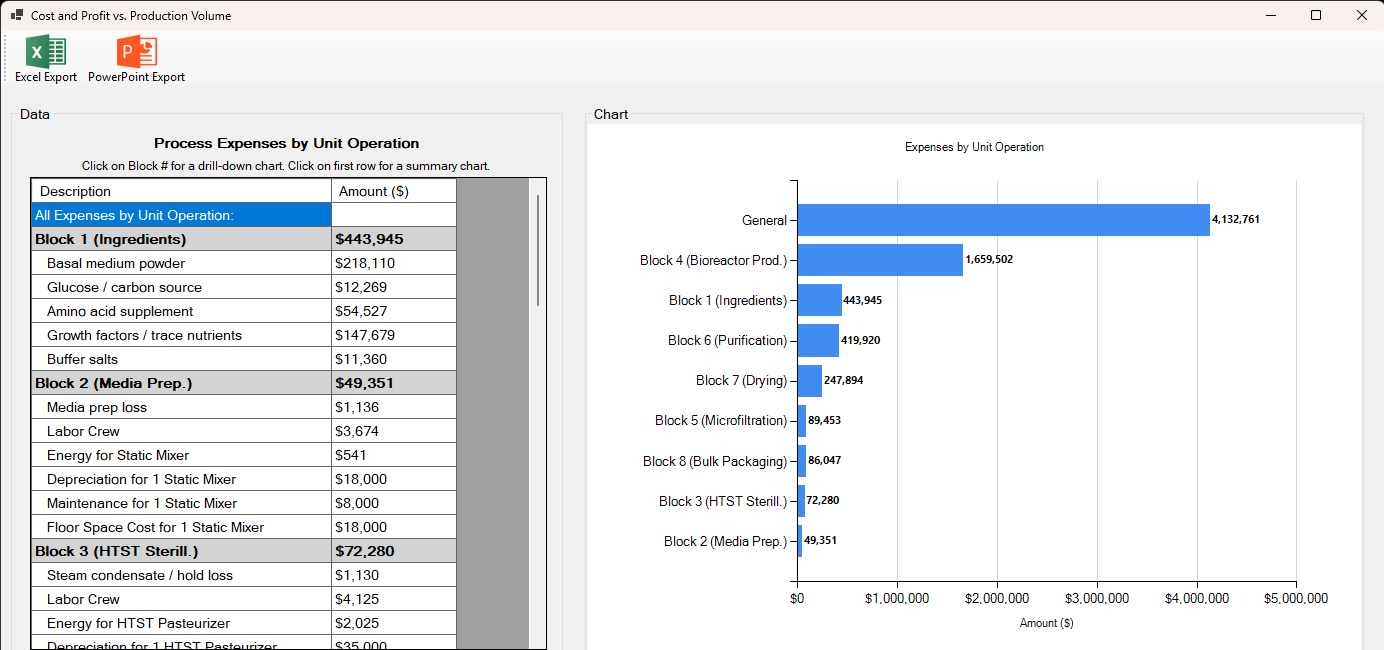
Compare 500 L, 2,000 L, 5,000 L, and 10,000 L fermenters using installed investment, labor, energy, maintenance, footprint, capacity, and fully loaded operating cost.
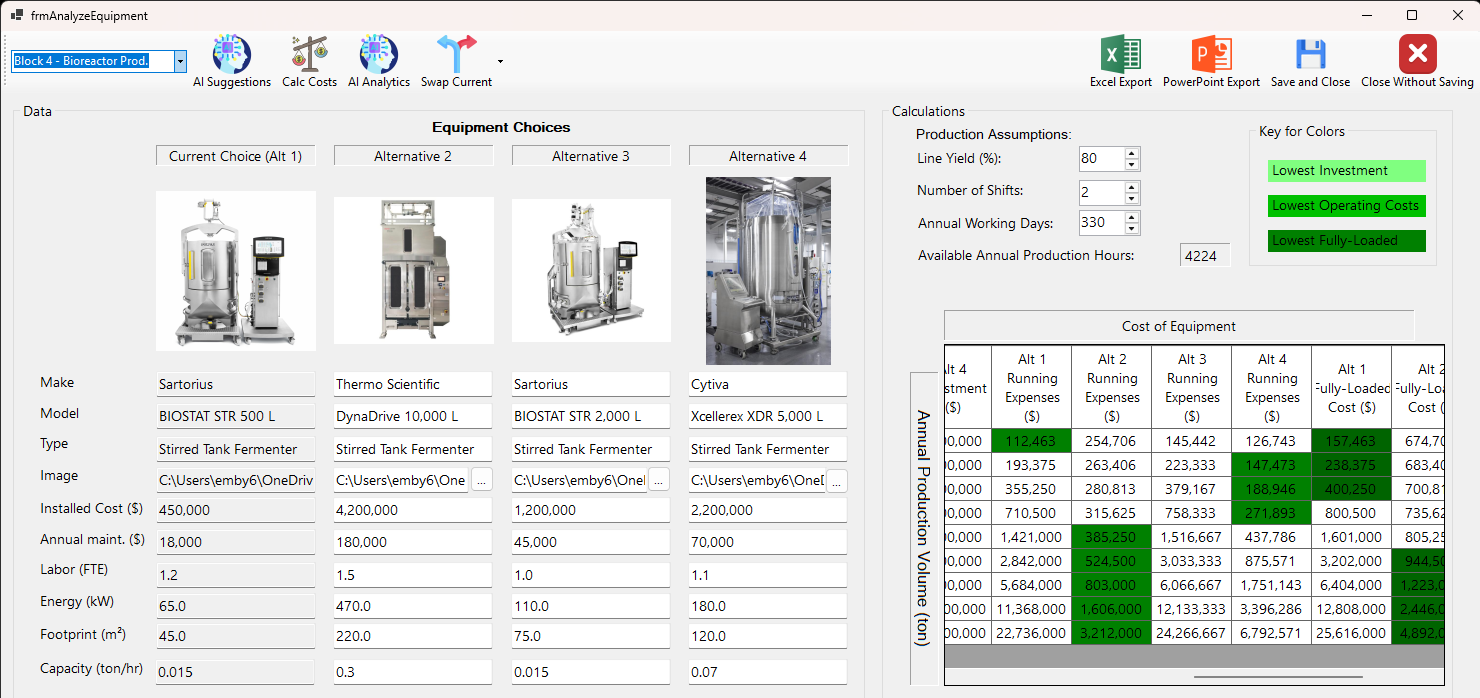
Replace the pilot fermenter with a commercial option and immediately review the updated throughput, cost structure, gross margin, operating profit, and operating margin.
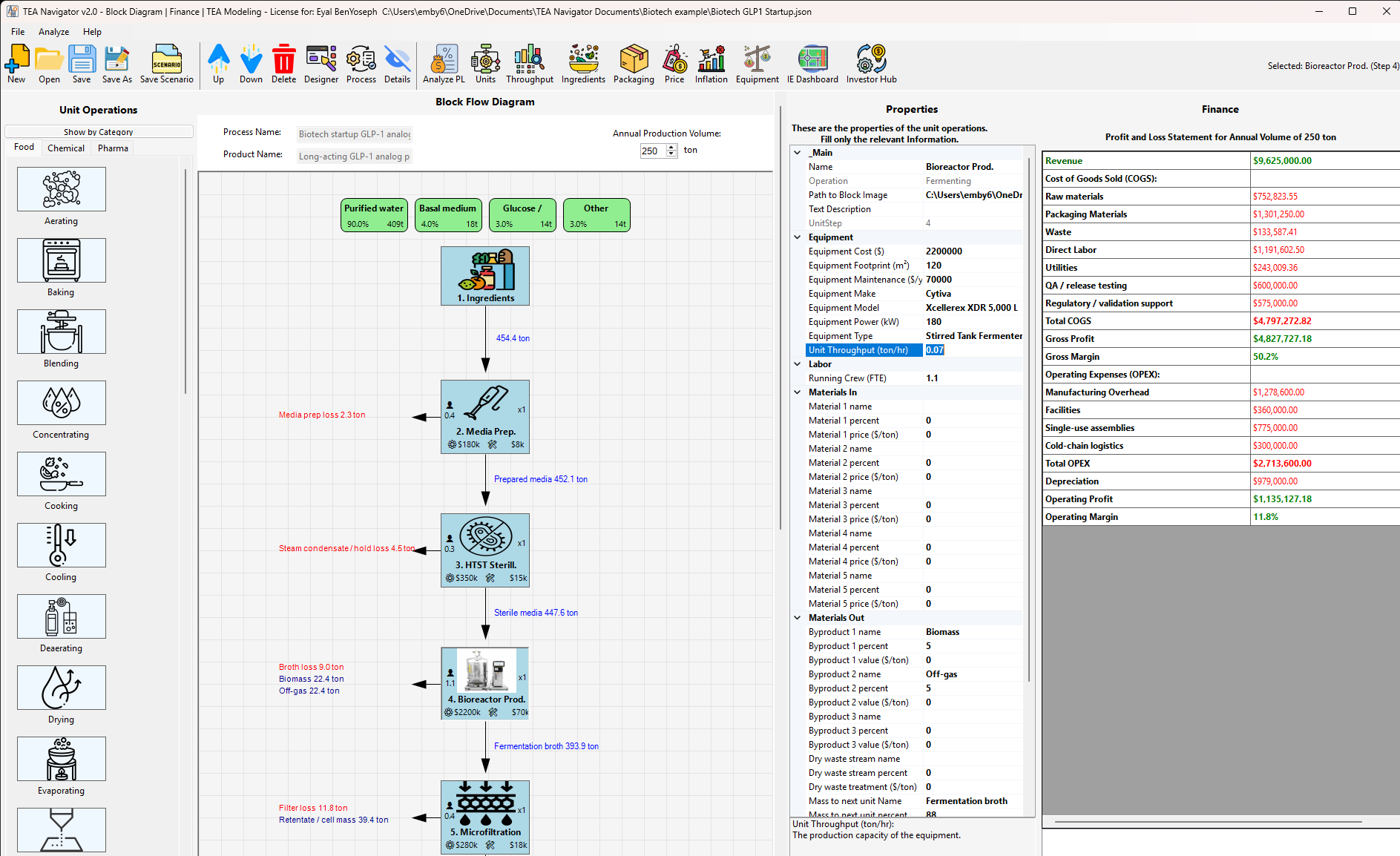
Evaluate operating margin over a range of annual production volumes and identify the production scale required to support a commercially attractive startup business.
The same startup project connects commercialization economics to a physics-based HTST model for media sterilization and nutrient-quality retention.
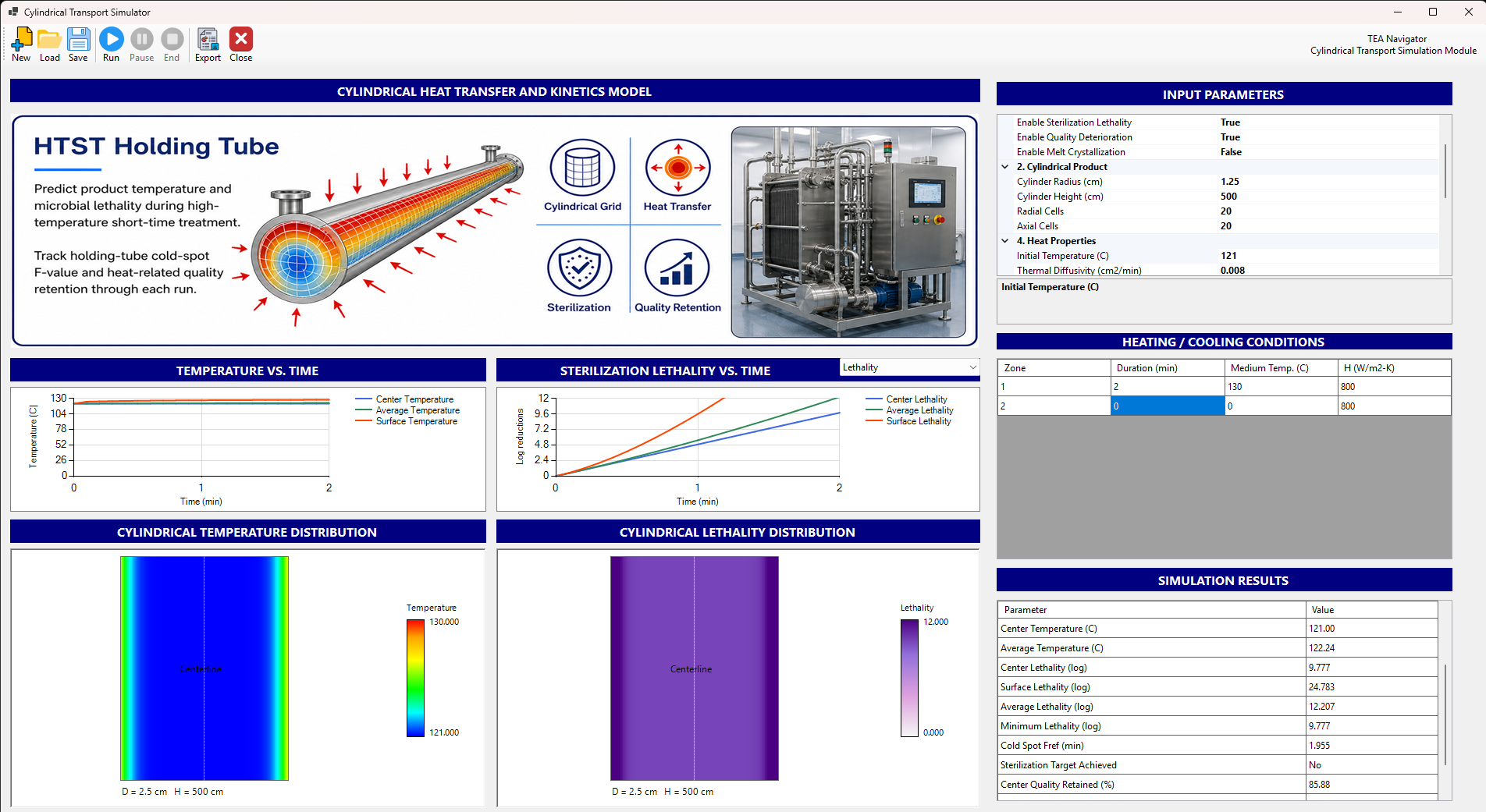
Predict product temperature, microbial lethality, cold-spot performance, and heat-related media-quality retention during continuous sterilization.
Evaluate how holding temperature, residence time, tube geometry, flow conditions, and heat transfer affect both sterility assurance and nutrient degradation.
Every TEA Navigator license includes a Guided Biotech Startup Industry Example designed to help you learn the software while exploring a realistic pilot-to-commercial scale-up decision.
Your learning package includes:
Additional guided Industry Examples are available for Pharmaceutical, Cosmetics, and Food Manufacturing. Simply indicate your industry of interest when requesting your license.
Build the process, compare equipment and scale-up pathways, test production assumptions, and connect technical performance to investor-focused financial outcomes.
Request your 10-day evaluation license and specify that you would like to receive the Guided Biotech Startup Industry Example.
Get Access