1
Build the process
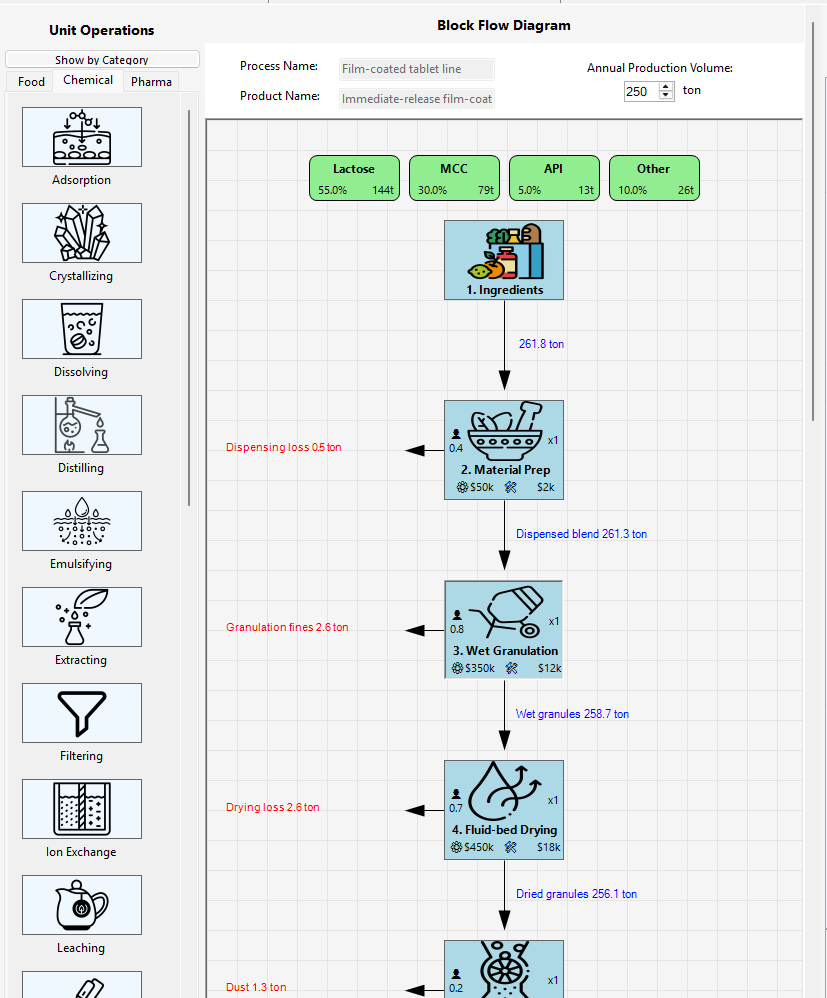
Create a block flow diagram by selecting unit operations from the library and arranging them in the manufacturing sequence. Define material flow, yields, by-products, and waste streams.
TEA Navigator supports agile product and process development by enabling R&D teams and engineers to rapidly evaluate technical alternatives and their economic impact before major investments are made.
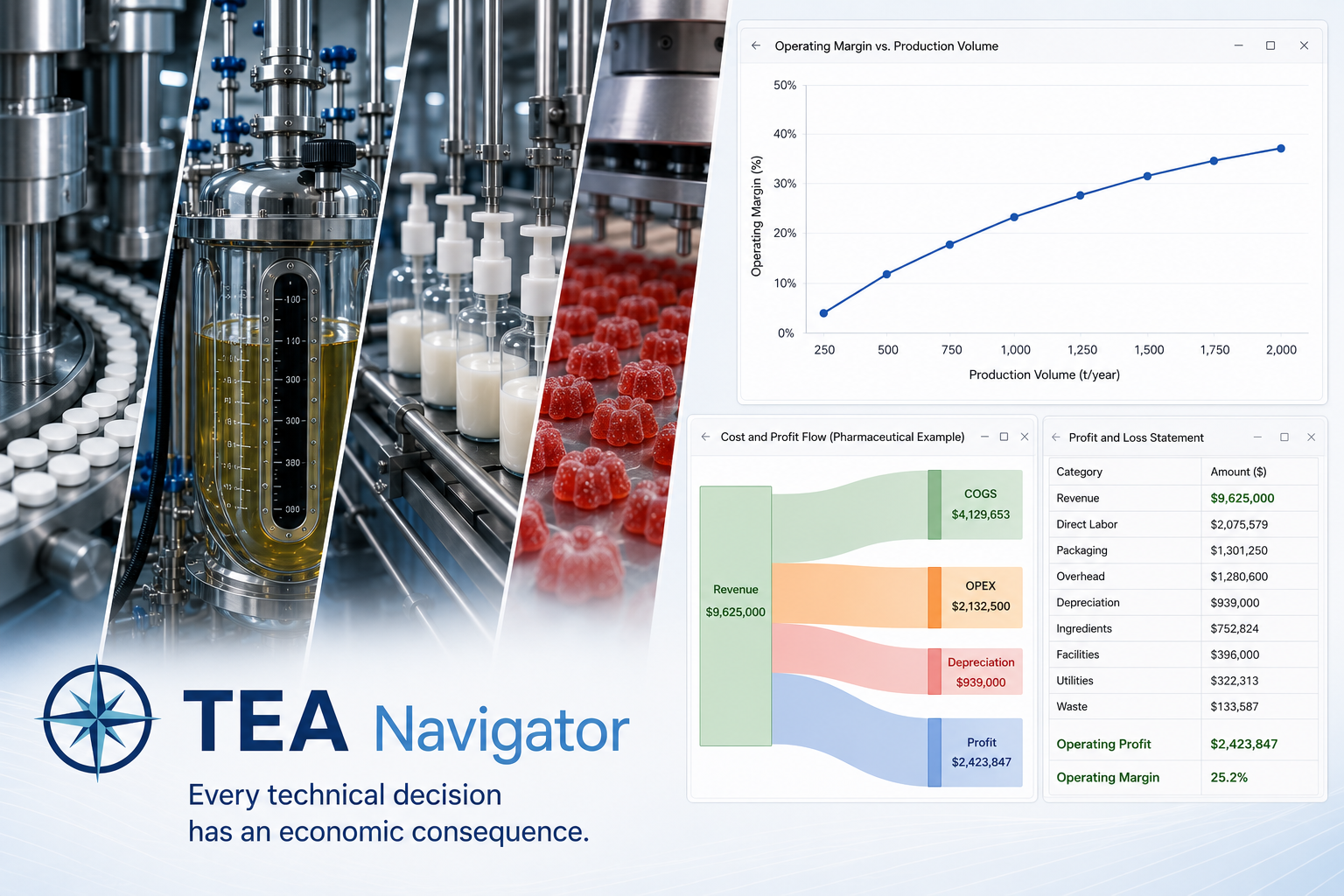
These are the types of questions engineers, scientists, and R&D teams face every day. Answering them often requires several software tools, complex spreadsheets, or extensive support from finance and engineering specialists.
Techno-Economic Analysis (TEA) combines engineering, process design, and economic evaluation to determine whether a technology, process, or product is technically feasible, financially viable, and commercially competitive.
TEA Navigator is an integrated decision-support platform for R&D and manufacturing that combines first-principles engineering models with techno-economic analysis, enabling teams to evaluate technical performance and economic impact together.
Create a block flow diagram by selecting unit operations from the library and arranging them in the manufacturing sequence. Define material flow, yields, by-products, and waste streams.
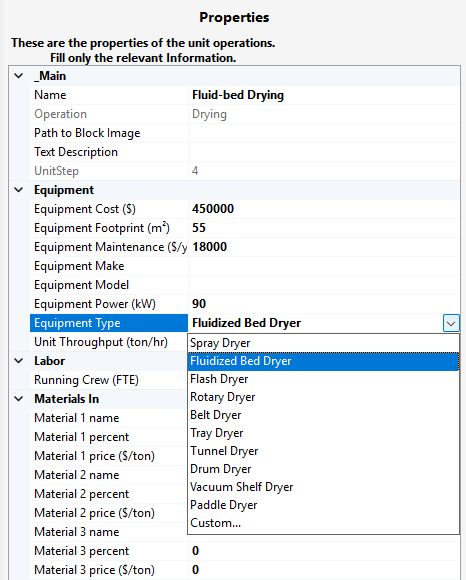
Define ingredients, recipes, process conditions, equipment, labor, utilities, packaging, and financial assumptions required for the analysis.
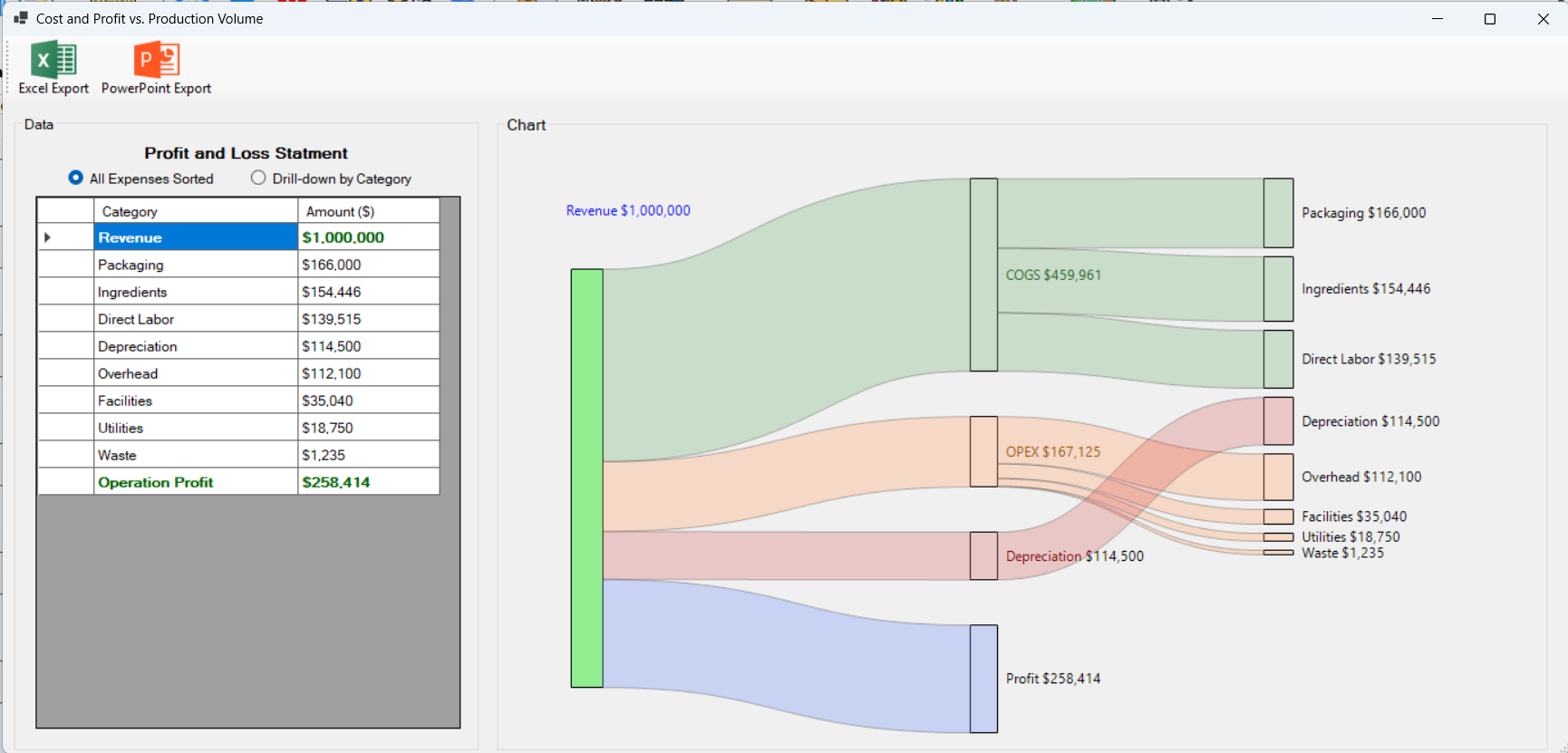
TEA Navigator automatically calculates material balances, manufacturing costs, COGS, P&L, operating profit, and operating margin. Integrated engineering models simulate selected unit operations to predict process performance.
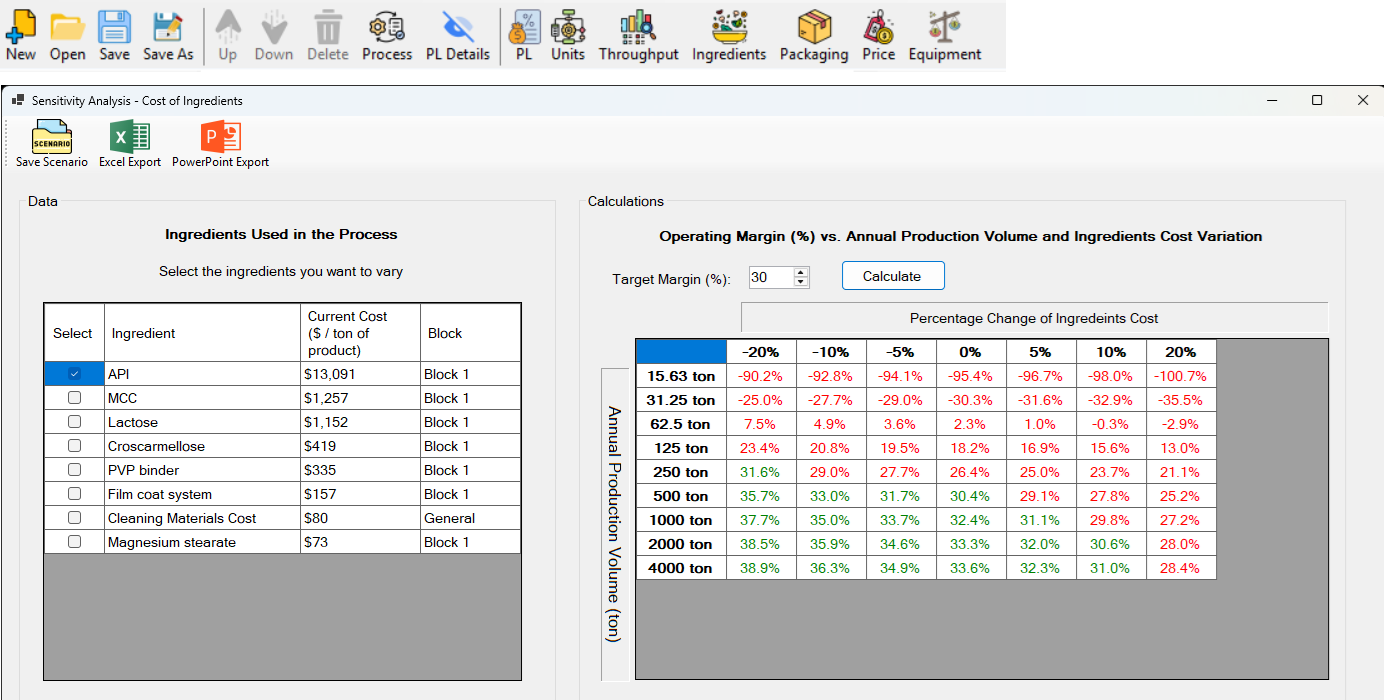
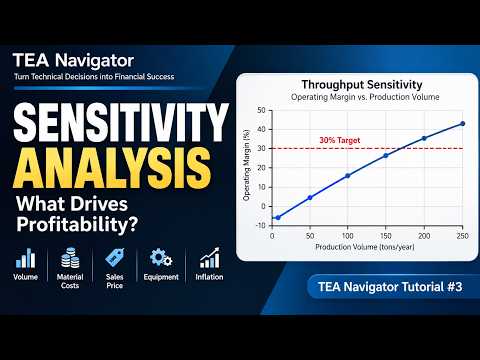
Evaluate formulation changes, process conditions, equipment options, and production volumes using What-If analysis, sensitivity analysis, and equipment comparisons.
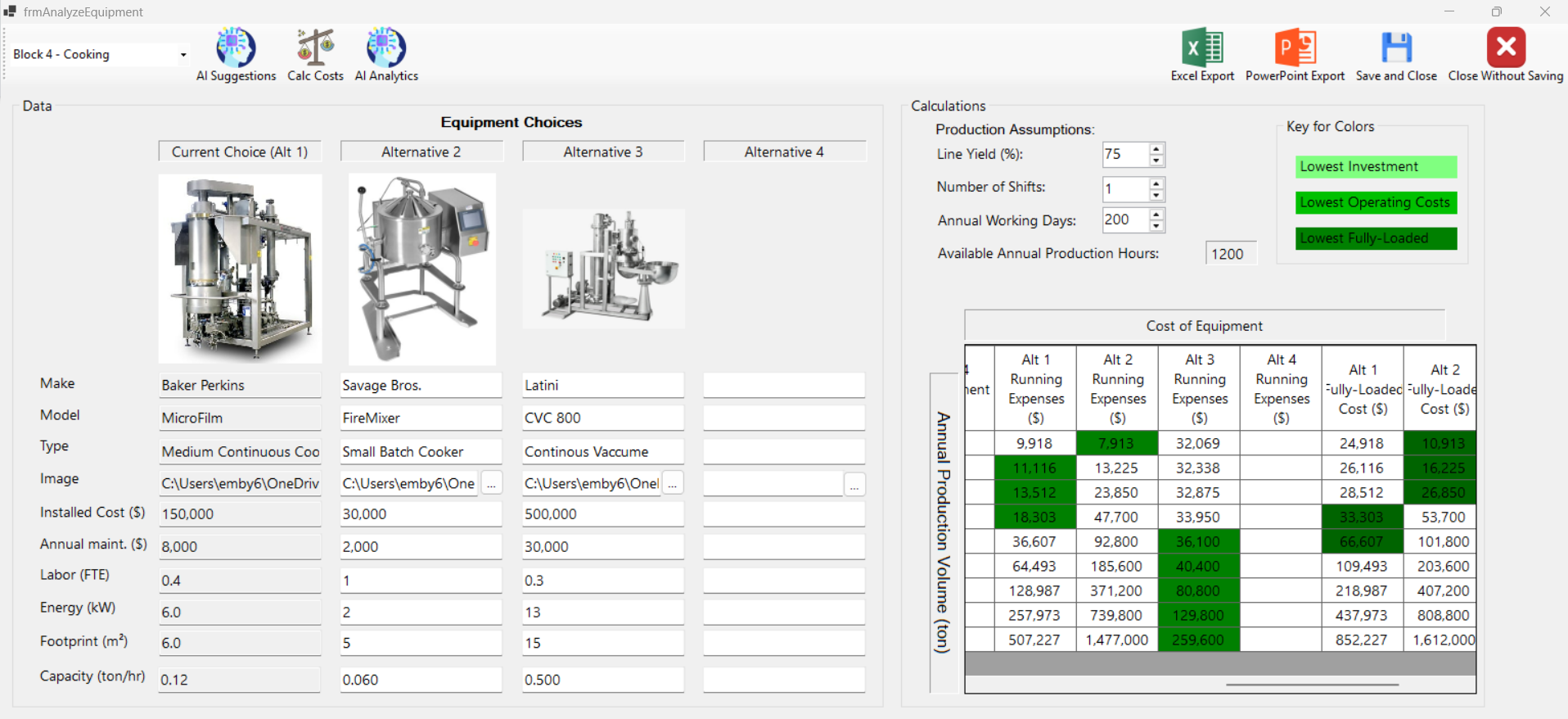
Identify cost drivers, bottlenecks, and improvement opportunities. Generate reports, dashboards, and presentations to support R&D, engineering, manufacturing, management, and investor decisions.
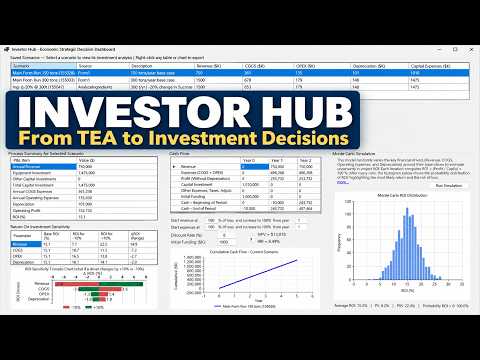
Translate process economics into an investment-focused view. The Investor Hub brings together capital requirements, ROI, cash flow, NPV, IRR, scenario analysis, and Monte Carlo simulation to help startups communicate the financial case to founders, investors, and other funding stakeholders.
TEA Navigator combines first-principles engineering models with economic analysis, so technical performance and financial impact can be evaluated together.
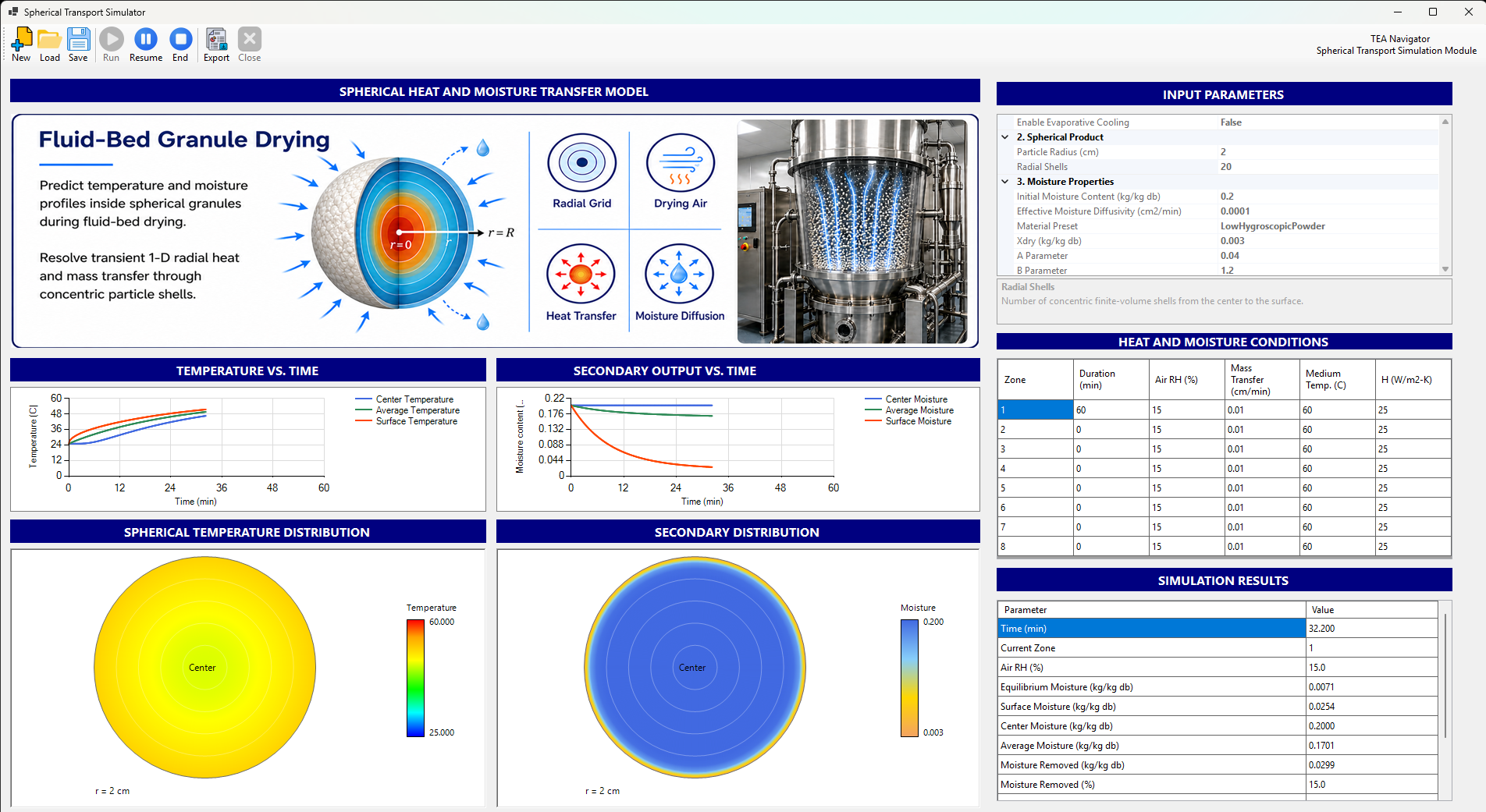
Predict temperature and moisture profiles inside granules during drying. Evaluate the effects of air temperature, humidity, particle size, heat transfer, mass transfer, and drying time.
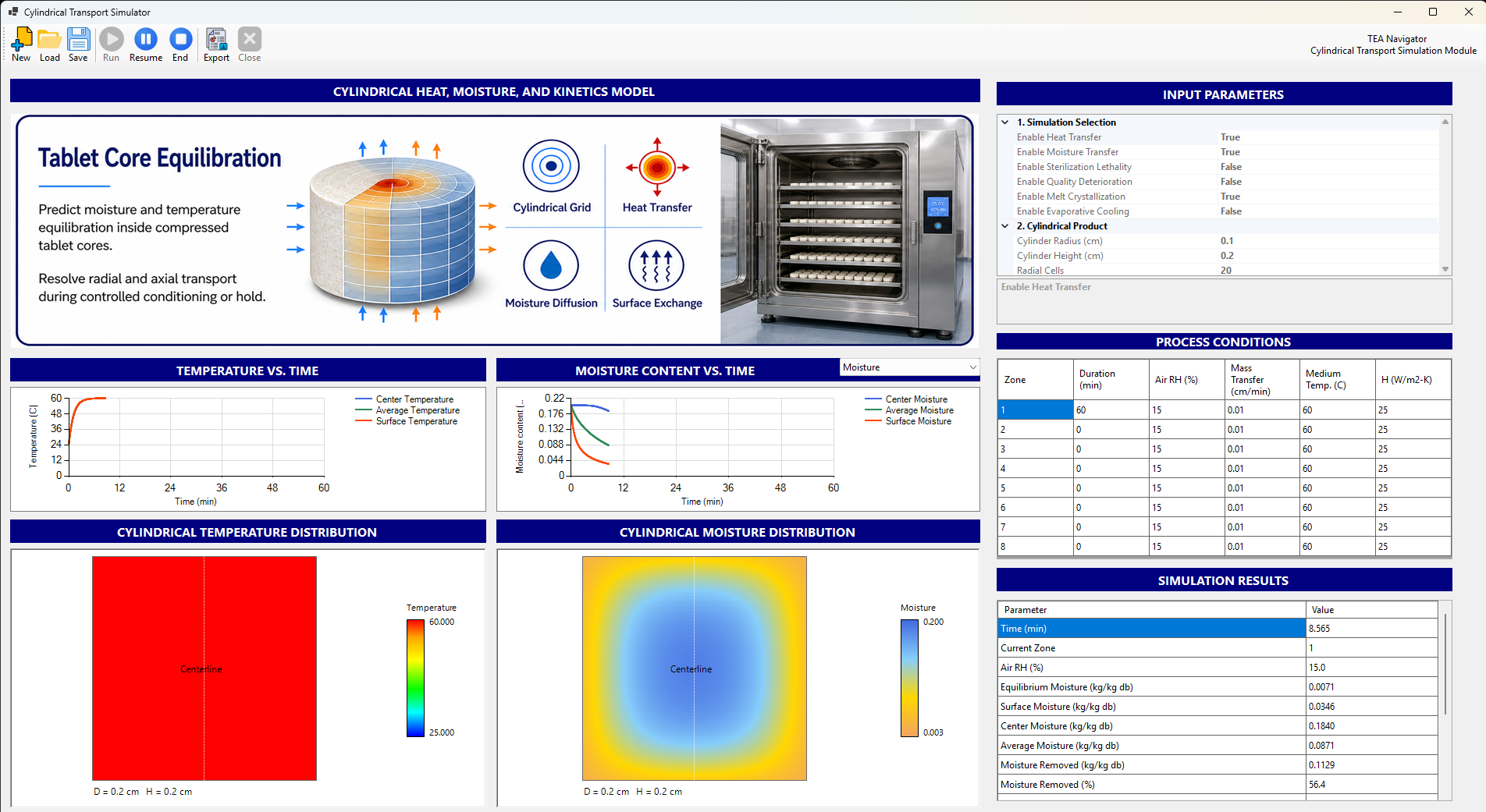
Simulate heat and moisture redistribution inside a tablet after processing. Estimate equilibration time and evaluate how geometry, material properties, and boundary conditions affect the result.
Start with a 10-day free trial. Students and faculty may request one academic semester of free access.